Useful signals arrive everywhere
X posts, newsletters, articles, agent sessions, notes, and conversation fragments all carry useful information, but most of it should not immediately become trusted knowledge.
Knowledge OS proof page
Most teams do not need "more AI" first. They need a better operating loop: intake, triage, review, execution, feedback, and memory. Knowledge OS is my proof that I build those loops for my own work before recommending them to anyone else.
Knowledge OS is the internal operating layer behind my current work. It keeps source material, agent runs, review queues, and publishing artifacts visible enough to trust and improve.
X posts, newsletters, articles, agent sessions, notes, and conversation fragments all carry useful information, but most of it should not immediately become trusted knowledge.
The hard part is deciding what matters, what should be ignored, what needs a source check, and what deserves to become an artifact or memory.
The current Knowledge OS separates intake, durable memory, governed process, and reviewable output. It is deliberately inspectable: every useful loop leaves an artifact.
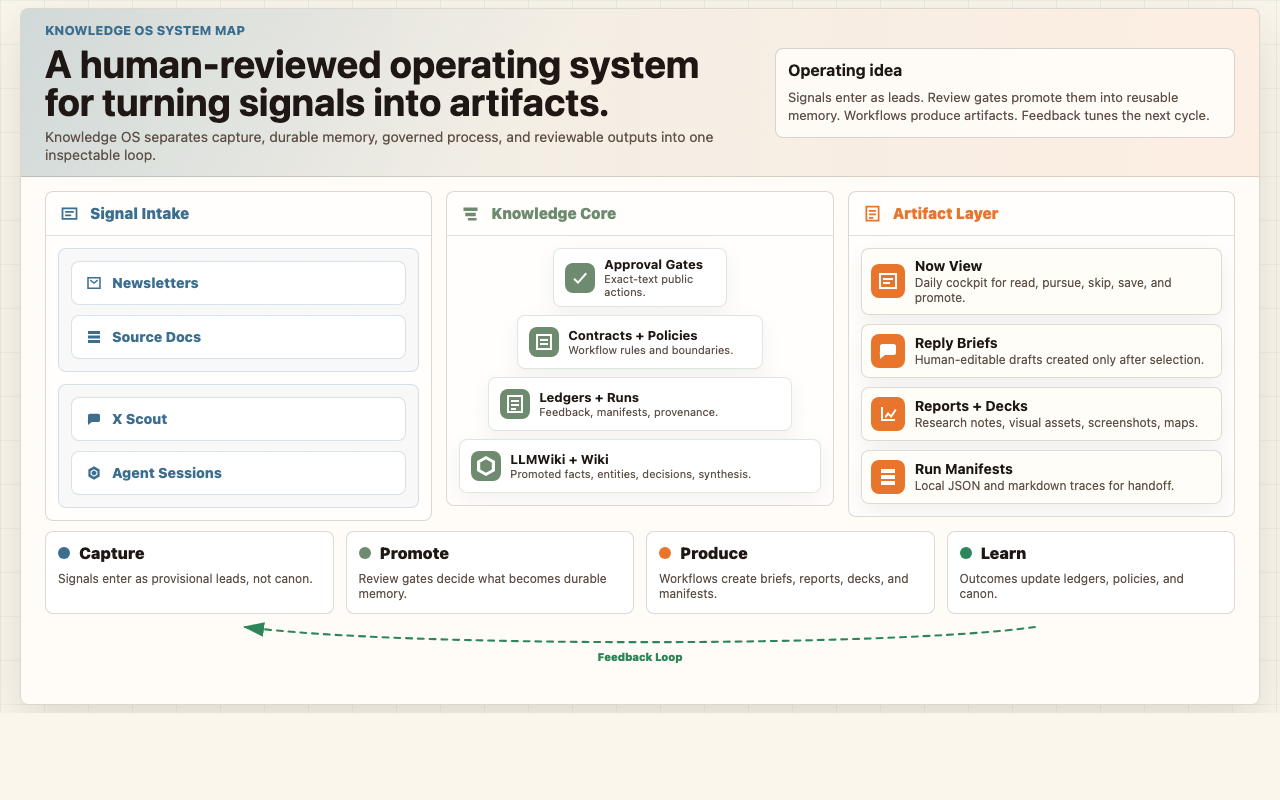
The system is layered so raw capture, governed knowledge, agent workflows, and publishing surfaces can evolve independently.
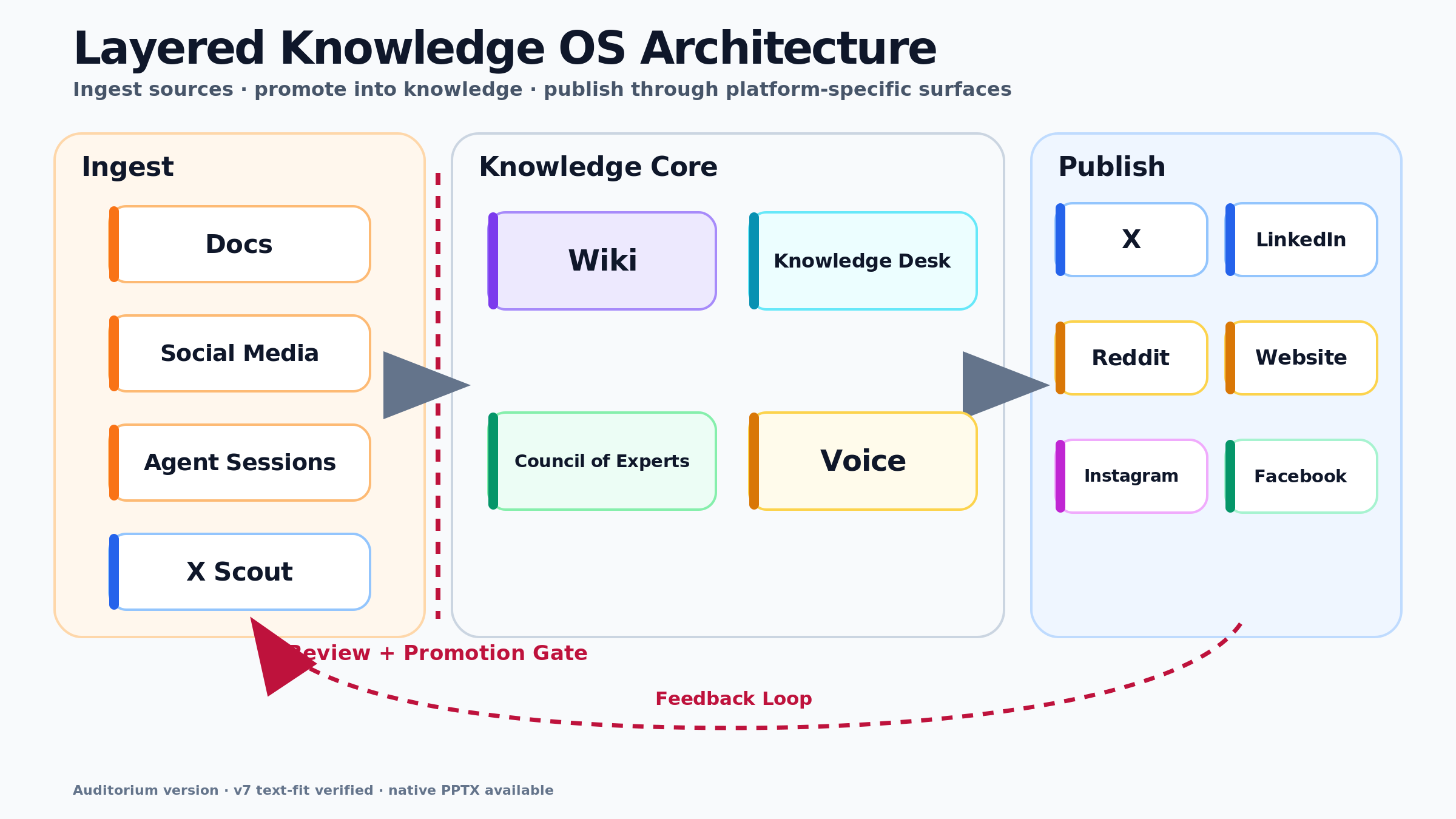
Tracks relevant public signals, produces candidate queues, and keeps reply work behind explicit review.
Turns email/newsletter material into reviewable leads without treating raw email as canonical knowledge.
Shows the current state of signals, review queues, and next useful actions in plain files.
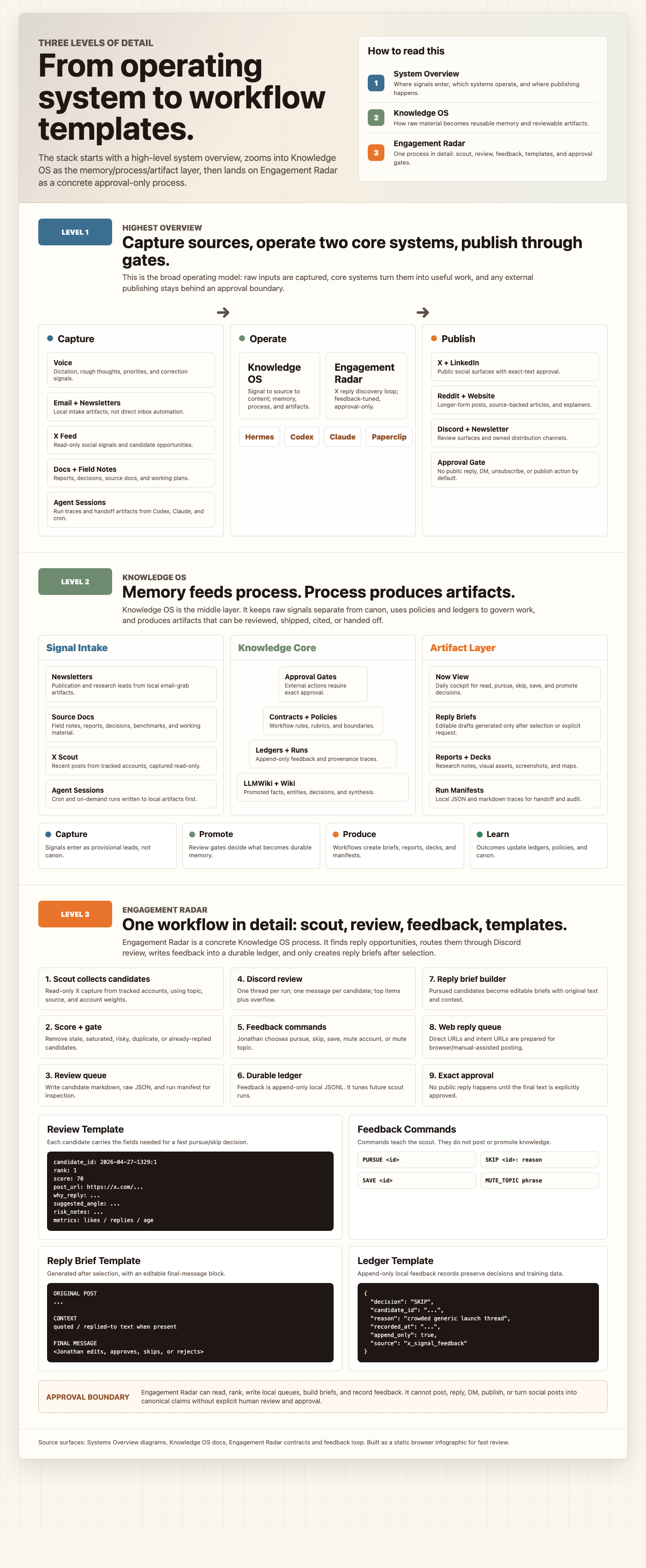
This view shows the named system, the operating zones, and how a concrete workflow such as Engagement Radar fits inside the wider Knowledge OS.
How this maps to client work
I do not start with generic AI use cases. I map the intake, triage, review, execution, feedback, and memory loop around the work itself, then design the review gates and artifacts that make the system usable after the demo.
The same pattern applies to research queues, intake triage, reporting workflows, approvals, handoffs, and repeated operational decisions.